


Using Cold and Hot in Japanese
寒い and 冷たい
Japanese differentiates between coldness in general (the weather or how you feel) and coldness when touched or interacted with (objects). The same is true with hot (see below).
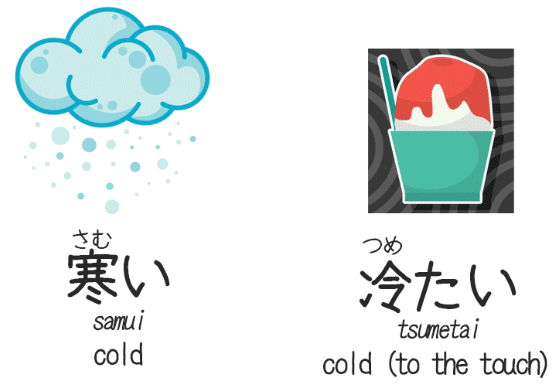
For example, you would say:
今日は寒いですね。
kyou wa samui desu ne.
today is cold isn’t it?
However, you would use a different word for the following even though in English both would be “cold.”
氷は冷たいです。
koori wa tsumetai desu.
Ice is cold (to the touch).
In general, if the weather is cold OR you are cold (your body), use 寒い. For objects that are touchable, use 冷たい.
One interesting fact is the weather in general is 寒い samui, but the wind and rain is 冷たい tsumetai.
寒いです!
samui desu!
It’s cold!
はい、風が冷たいです。
hai, kaze ga tsumetai desu.
Yes, the wind is cold.
Using 暑い and 熱い
“Hot” follows the same concept. Hot weather (or you are hot) uses 暑い and hot to the touch objects uses 熱い. Note, unlike “cold,” Japanese uses the same sounding word for the two concepts. When written as kanji, however, they are different.
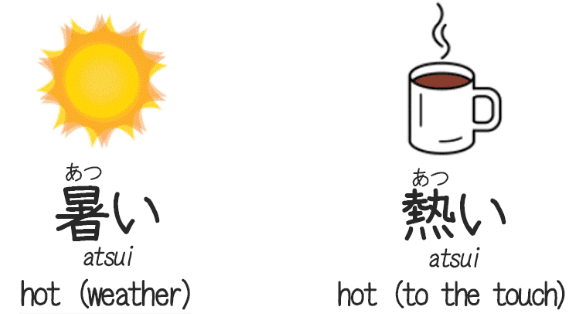
今日は暑いですね。
kyou wa atsui desu ne.
today is hot isn’t it?
And…
お皿が熱
いので、気をつけてください。
osara ga atsui node, ki o tsukete kudasai.
The plate is hot so please be careful.