
梅干 Umeboshi
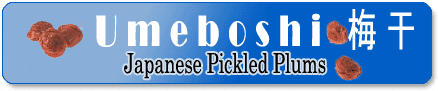
One of my favorite traditional Japanese food is umeboshi.
梅 plum
+ 干 (干 with phonetic change after 梅) dry
= dried ume plum
Umeboshi are usually roundish, red, wrinkled and about the size of a large grape. But there are many varieties found throughout Japan. Most are salty and very sour but some are a little sweet. It is often said to be very healthy, but it must have a very high amount of sodium.

The above photo are the last two umeboshi in the Boutwell house. Yumi’s mother will get more in the mail, but I’m afraid we will be 梅干less for a few weeks. The dark clump to the right is called 紫蘇. It is from a plant (perilla; a beefsteak plant) and is very tasty with umeboshi and rice.
Usually umeboshi is eaten with rice. A cup full of rice only needs one umeboshi to be full of flavor. A common 弁当 lunch box is called 日の丸弁当 which resembles the flag of Japan (a single umeboshi in the middle surrounded by white rice).
But perhaps most common is for umeboshi to be found in おにぎり. Onigiri are rice balls often wrapped in のり (seaweed). Pitted umeboshi can be placed in the center of the onigiri for a very scrumptious snack.

You can buy 梅干飴 Umeboshi candy and soda made with umeboshi juice (probably all artifical flavors but it is good!)
A not so nice word is 梅干婆. I’m sure you can figure out what context it is used, but it means a prune-faced old hag. I don’t suggest using it.
Enjoy & Happy Sharing!