


Knowing the hiragana chart is one skill. Reading a whole sentence is another: your eyes have to group the letters into words, and a few letters stop making their usual sound. The only way to build that skill is to read, so this page gives you a lot to read, from three-word sentences up to a sixteen-line story.
Everything here is in hiragana, with no romaji and no kanji. Every sentence has audio from Yumi, a native speaker, so you can check yourself by ear. Words are spaced apart to help you see where each one ends. Tap an answer in the quizzes to check it, and your score is at the bottom.
How to use it: read each line out loud first, then press play and compare, then open the English. Reading before you listen is what makes this practice.
Still learning the letters? Start with the hiragana chart and the hiragana quiz, then come back.
Before you start: what the letters do in a sentence
- は sounds like わ when it is a particle marking the topic.
- へ sounds like え when it is a particle meaning “to” or “toward.”
- を sounds like お.
- A small っ, as in ちょっと, is a short catch: stop for one beat before the next sound.
- Small ゃ ゅ ょ blend with the letter before them into one beat, as in the きょ of きょう.
- The ー line holds the sound longer, as in すーぱー. It belongs to katakana, but the stories below use it in hiragana.
- Some vowel pairs often stretch into one long sound: おう as in とうきょう is a long お, and えい as in せんせい is a long え.
Part 1: Sound check
Look at the underlined letter. Does it keep its usual sound, or does it change? Decide first, then press play to hear it.
えき は どこ です か。
ぞう は はな が ながい。
ほん を よみました。
しごと で へとへと です。
きょう は はれて います。
わたし の しゅみ は ほん を よむ こと です。
うさぎ は ぴょんぴょん はねます。
Part 2: Read, listen, check
No score here, only reading. Say each line out loud, press play, then open the English. Do the whole list twice if you can.
Short sentences
ねこ が います。
English
ねこ が すき です。
English
こども が すき です。
English
いい てんき です ね。
English
ゆき が ふって います。
English
あめ が ふって います。
English
おなか が すきました。
English
よる に なりました。
English
With は and small letters
きょう は あつい です ね。
English
としょかん は どこ です か。
English
あした は かようび です。
English
こうえん に いきましょう。
English
ともだち に なりましょう。
English
ゆっくり はなして ください。
English
もう いっかい いって ください。
English
Longer sentences
となり に おばあさん が います。
English
いま ごはん を たべて います。
English
くるま の した に ねこ が います。
English
まいにち にほんご を べんきょう します。
English
ことし の ふゆ は とても さむい です。
English
あたらしい ほん を かいました。そして きょう から よみます。
English
Part 3: What does it mean?
Read the sentence and choose the meaning. The audio appears once you answer, so read it on your own first. Each explanation gives you the words you need.
とうきょう に すんで います。
みぎ に やま が みえます。
いぬ の さんぽ に いきます。
りょうり は たのしい です。
きのう だれか が きました か。
とちゅう で ともだち に あいました。
Part 4: Three short stories
These come from Yonde Miyo, our set of hiragana readers. They spell loanwords like あぱーと (apartment), すーぱー (supermarket) and the name くれい (Clay) in hiragana, so that you can read everything with one set of letters. In everyday Japanese these would be in katakana.
Story 1: にほん の ゆきだるま (The Japanese Snowman)
A short, gentle one. Japanese snowmen are a little different from the ones you may know. Eight lines.
The whole story, normal speed
The whole story, slowly
ふゆ に なる と、にほん の こどもたち は、がいこく の こども と おなじ ように ゆき で あそびます。
English and words
ゆき がっせん を したり、ゆきだるま を つくります。
English and words
でも、にほん の ゆきだるま と がいこく の ゆきだるま は ちょっと ちがいます。
English and words
がいこく の おおく の ゆきだるま は、みっつ の たま で つくります。
English and words
でも、にほん の ゆきだるま は、ふたつ です。
English and words
あたま と からだ です。
English and words
そう です。
English and words
にほん の ゆきだるま は、あし が ない の です。
English and words
How many balls make a Japanese snowman?
What does a Japanese snowman not have?
In winter, the children play in what?
Story 2: げんかん と くれいさん の くつ (The Entryway and Clay’s Shoes)
A story about Clay’s first apartment in Japan. Japanese homes have a げんかん, an entryway where you take off your shoes before stepping up into the house. Nine lines.
The whole story, normal speed
The whole story, slowly
くれいさん は、がっこう の せんせい に てつだって もらって、じぶん の あぱーと を かりました。
English and words
はじめて あぱーと の へや に いきました。
English and words
「ここ が、にほん で はじめて の わたし の へや です!」
English and words
と、くれいさん は いいました。
English and words
そして、おおよろこび で へや に はいりました が、せんせい は くれいさん を とめました。
English and words
「どうしたの? せんせい?」
English and words
と、くれいさん は ききました。
English and words
せんせい は、くれいさん の あし を ゆびさして 「くつ!」
English and words
と、いいました。
English and words
Who helped Clay rent the apartment?
What word did the teacher say at the end?
Why did the teacher stop Clay?
Story 3: なっとう (Natto)
なっとう is fermented soybeans, a popular breakfast food in Japan with a very strong smell. Sixteen lines and the longest read here. If you finish this one, you are reading.
The whole story, normal speed
あるひ、くれいさん と にほんじん の ともだち は、すーぱー に いきました。
English and words
そこで、にほんじん の ともだち は、いろいろな にほん の たべもの を しょうかい して くれました。
English and words
「これ、たべた こと が あります か?」
English and words
にほんじん の ともだち は、ある もの を て に とりました。
English and words
「それ は なん です か?」と、くれいさん は ききました。
English and words
「なっとう です。」
English and words
「なっとう って なん です か?」
English and words
「ほとんど の がいこくじん は、きらい で、たべません。」
English and words
くれいさん は、にほん が だいすきな ので、なんでも たべて みたい と おもいました。
English and words
「わたし は、ぜったい たべます!」と、くれいさん は いって、その なっとう を かいました。
English and words
つぎ の ひ、くれいさん は おなか が すきました。
English and words
なっとう を おもいだしました。
English and words
「にほん が すきな ので、にほん の もの なら なんでも、ぜったい たべます。」
English and words
しかし、なっとう の ふた を あけたら、すごい におい が しました。
English and words
「あ! くさい! くさっている!」くれいさん は、その なっとう を ごみばこ に すてました。
English and words
それから、なんねんも、くれいさん は なっとう を たべませんでした。
English and words
Where did Clay and his friend go?
Why did Clay want to try natto?
What did Clay do with the natto?
Stories from Yonde Miyo Volume 1, read by Yumi.
Answer the questions above, then press the button.
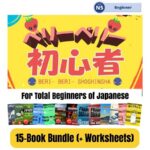
Want more to read? The Beri-Beri Shoshinsha bundle has all five Yonde Miyo volumes, 50 stories, each one in hiragana first and then with kanji, plus our hiragana and katakana books, worksheets, flashcards and beginner grammar, with native audio.
More free practice: hiragana reading game · hiragana quiz · another hiragana story: Clay is Lost · N5 reading practice